
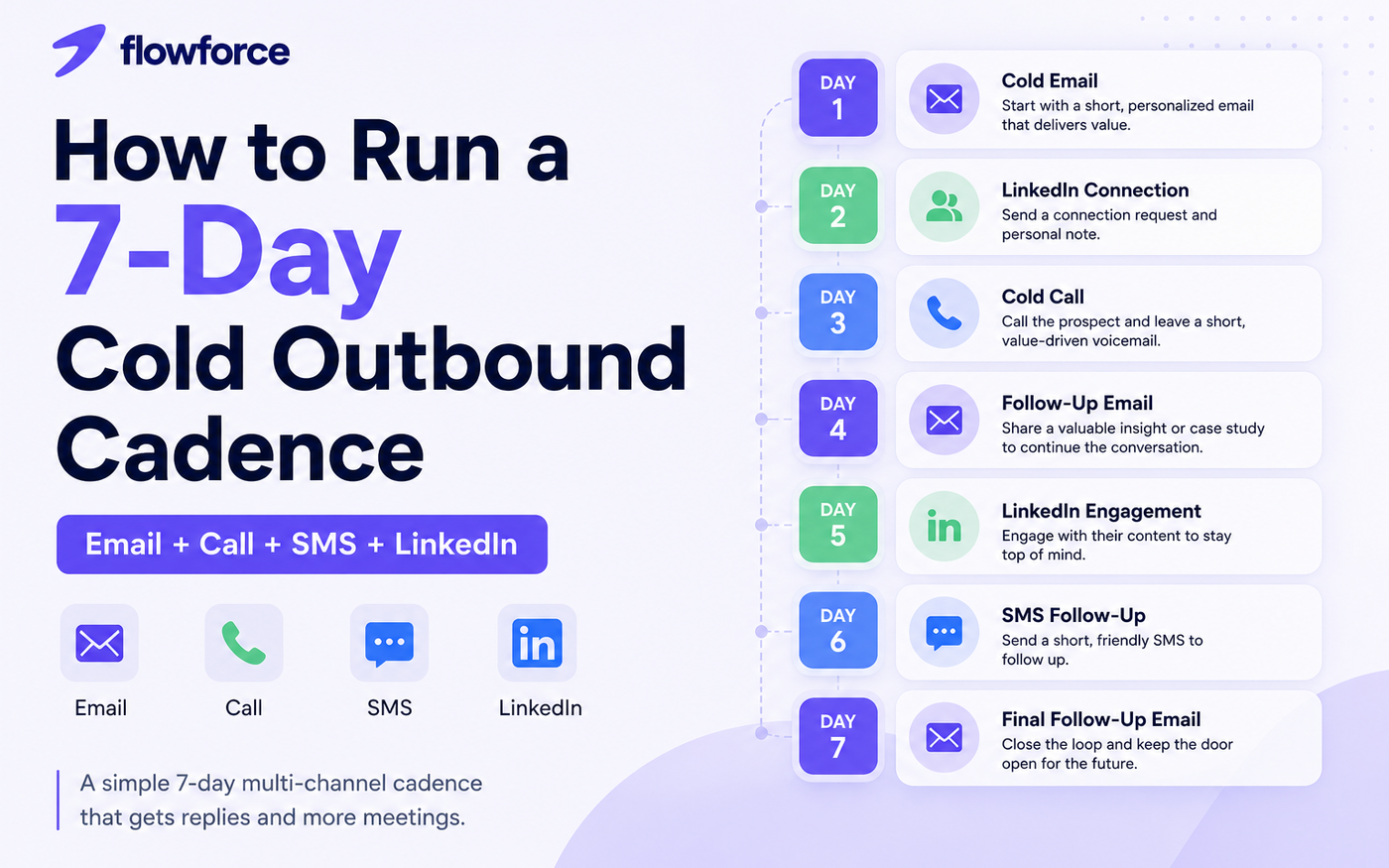
How to Run a 7-Day Cold Outbound Cadence That Gets Replies
Cold outbound works best when communication feels consistent instead of random.
Most sales reps fail because they either:
- send one email and stop
- over-message prospects
- rely on a single channel
- forget follow-ups entirely
A structured 7-day cold outbound cadence solves this problem.
By combining email, calls, SMS, and LinkedIn touches into one workflow, sales teams can stay visible without overwhelming prospects.
The goal is not to spam people.
The goal is to create multiple opportunities for engagement across different communication channels.
What Is a 7-Day Cold Outbound Cadence?
A 7-day cold outbound cadence is a short outbound sales sequence designed to generate replies, conversations, or booked meetings within one week.
Instead of relying on a single outreach attempt, reps use multiple touchpoints over several days.
This usually includes:
- Cold email
- Phone calls
- SMS follow-ups
- LinkedIn engagement
A multi-channel cadence increases the chances of getting noticed because different prospects respond to different channels.
Some people reply to email.
Others answer calls.
Some engage faster through LinkedIn or SMS.
The key is consistency without becoming repetitive.
Why Multi-Channel Outbound Performs Better
Single-channel outreach is becoming less effective.
Inbox competition is high, and prospects are flooded with cold emails every day.
Adding calls, LinkedIn, and SMS creates more visibility and improves response rates.
Multi-channel outbound helps sales teams:
- Stay top of mind
- Build familiarity
- Increase response opportunities
- Reach prospects where they are most active
- Reduce dependence on email opens
It also creates a more natural communication flow.
For example:
- A prospect may ignore your first email
- Notice your LinkedIn profile later
- Then respond after a follow-up call
That sequence feels more human than sending five cold emails in a row.
The Ideal 7-Day Cold Outbound Cadence
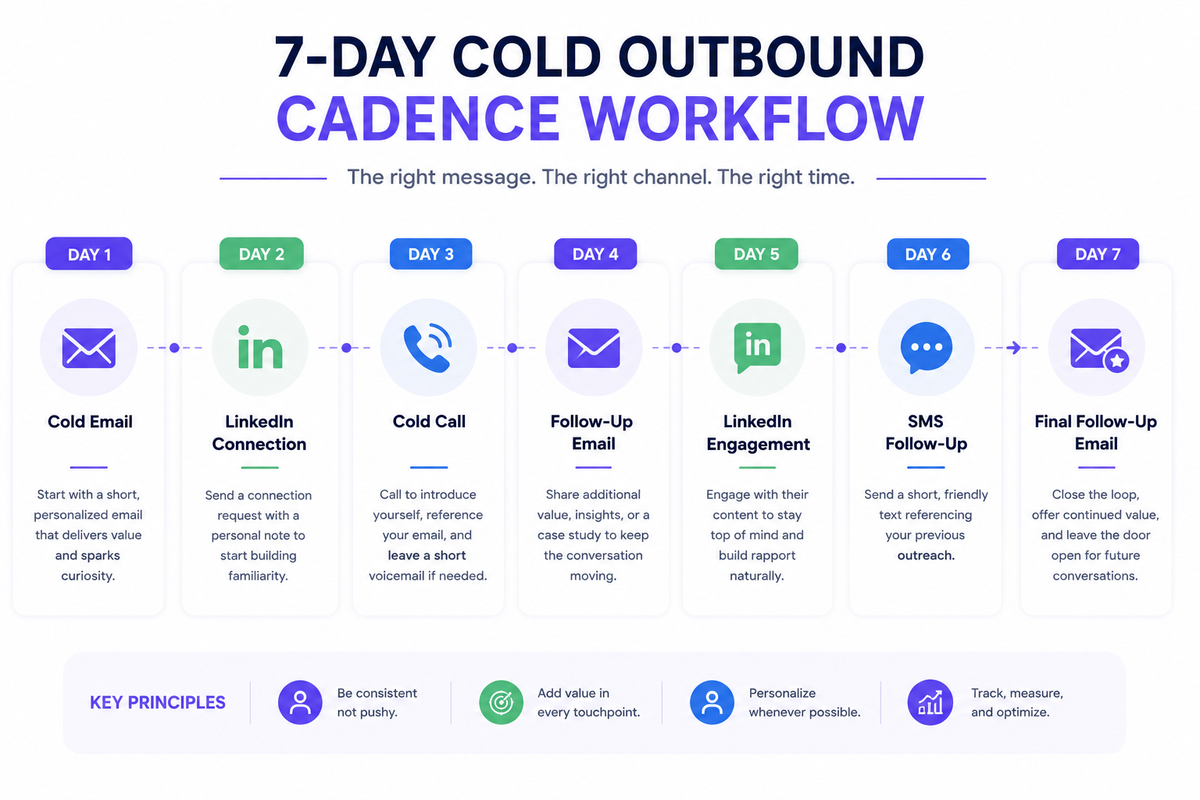
Here is a practical outbound cadence small sales teams can use.
Day 1 — Cold Email
Start with a short personalized email.
Focus on:
- relevance
- pain point
- outcome
- clear CTA
Do not overload the message with long introductions.
The goal is to start a conversation.
Example CTA:
- “Open to a quick conversation next week?”
- “Worth exploring?”
- “Interested in seeing how this works?”
Day 2 — LinkedIn Profile View + Connection Request
Visit the prospect’s LinkedIn profile before sending a connection request.
Keep the request short.
Avoid pitching immediately.
Good example:
“Hey Sarah, came across your profile while researching outbound sales workflows. Thought it made sense to connect.”
Day 3 — Cold Call
Call while the prospect has already seen your:
- LinkedIn activity
- company name
This increases familiarity.
If they do not answer:
- leave a short voicemail
- mention the email
- keep it under 20 seconds
Example:
“Hey Sarah, just following up on the email I sent regarding outbound workflow automation for small sales teams.”
Pro Tip
Cold calls perform better when prospects already recognize your name from email or LinkedIn touches earlier in the cadence.
Day 4 — Follow-Up Email
Your second email should not repeat the first message.
Instead:
- add value
- share insight
- mention a relevant problem
- include a short case example
Keep it conversational.
Day 5 — LinkedIn Engagement
Engage with one of the prospect’s posts if relevant.
This should feel natural.
Avoid fake engagement.
Even a simple thoughtful comment helps increase familiarity before the next touchpoint.
Day 6 — SMS Follow-Up
SMS works best when:
- the prospect already knows your name
- previous outreach exists
- the message is short
Example:
“Hey Sarah — sent over a quick email earlier this week regarding outbound workflow automation. Happy to share more details if helpful.”
Avoid aggressive sales language.
Day 7 — Final Follow-Up Email
Your final message should create a low-pressure close to the sequence.
Example:
“Completely understand timing may not be right. Happy to reconnect in the future if improving outbound efficiency becomes a priority.”
This keeps the door open without sounding pushy.
Common Mistakes in Cold Outbound Cadences
Many outbound cadences fail because they create too much friction.
Sending Long Emails
Cold emails should be short and easy to scan.
Using Too Many Touchpoints Daily
Multiple touches in one day can feel spammy.
No Personalization
Generic outreach gets ignored quickly.
Not Tracking Activity
Without activity tracking, reps lose context between touchpoints.
Switching Between Too Many Tools
Using separate systems for:
- CRM
- calling
- SMS
- LinkedIn tracking
Creates operational friction.
How Flowforce Helps Manage Cold Outbound Cadences
Managing multi-channel outbound manually becomes difficult very quickly.
Flowforce helps sales teams centralize outreach workflows in one platform.
Instead of juggling separate tools, teams can:
- manage leads
- send emails
- make calls
- track SMS conversations
- monitor follow-ups
- organize outreach activity
From one workspace.
Flowforce also supports:
- browser-based calling
- lead management
- AI-generated email drafts
- cadence tracking
- centralized communication history
This makes it easier for small sales teams to stay consistent without losing visibility across outreach channels.
Metrics to Track in Your Outbound Cadence
A cadence should be optimized over time.
Track:
- Email reply rate
- Call connection rate
- Meetings booked
- SMS response rate
- LinkedIn acceptance rate
- Positive reply percentage
Small improvements across each stage compound quickly.
When to Adjust Your Cadence
Not every audience responds the same way.
You may need to adjust:
- timing
- channel order
- messaging
- number of touchpoints
For example:
- founders may respond faster on LinkedIn
- sales managers may prefer calls
- operators may prefer email
The best outbound teams constantly refine their cadence based on data.
Final Thoughts
A successful 7-day cold outbound cadence is not about sending more messages.
It is about creating consistent, relevant touchpoints across multiple channels.
By combining:
- calls
- SMS
Sales teams improve visibility and increase the chances of starting real conversations.
The teams that win outbound in 2026 are the ones that stay organized, move fast, and keep communication centralized.
Flowforce helps sales teams manage email, calls, SMS, and follow-ups from one workspace — without switching between multiple tools.
