Sales productivity is not about how busy your team looks. It is about how much of that effort actually moves leads, deals, and revenue forward.
Your team isn't underperforming. They're just busy in the wrong places.
Many sales teams are active all day. They update CRM records, search through email threads, rewrite follow-ups, chase notes, switch tabs, and prepare for calls. But when the month ends, the revenue number still falls short.
That is the busy team trap. Activity feels productive, but not every activity creates progress.
What Sales Productivity Actually Means
Sales productivity means turning time, effort, and activity into real sales outcomes.
It is not just the number of calls made, emails sent, meetings booked, or CRM updates completed. Those activities matter, but only when they help move the right leads and deals forward.
A productive sales team does not simply do more work. It spends more time on the work that creates revenue: prospecting, following up, qualifying, handling objections, booking meetings, and closing deals.
The problem is that many sales teams confuse activity with progress. A rep can be busy for eight hours and still spend very little time actually selling.
The Busy Team Trap
The busy team trap happens when a sales team has high activity but low revenue impact.
Everyone looks occupied. Reps are in the CRM. Managers are asking for updates. Emails are being written. Notes are being added. Deals are being reviewed. But the pipeline does not move as expected.
This creates a dangerous false signal. Managers may assume the team is productive because the team is active. Reps may feel like they are doing everything they can because their day is full.
But sales productivity depends on whether that activity leads to better conversations, faster follow-up, cleaner pipeline movement, and more closed revenue.
Manual Updates Are Stealing Selling Time
Manual CRM updates are one of the most common forms of hidden busywork.
Reps often have to update lead records, change deal stages, log calls, write notes, add meeting details, and keep managers informed. Each task may feel small, but together they take time away from selling.
The issue is not that CRM data is unimportant. Good data matters. The issue is that reps should not spend more time maintaining the system than using it to sell better.
When sales productivity is low, manual updates often become a major reason. The team is working, but too much of that work is administrative.
Searching for Context Slows Every Deal
Another major productivity killer is context hunting.
Before a call or follow-up, reps need to know what happened last. They may search through email threads, check notes, review previous calls, look for meeting details, or ask another teammate for context.
Every minute spent searching is a minute not spent selling.
This slows down follow-up and creates inconsistent buyer experiences. A rep may forget an important detail, repeat a question, or send a generic message because the right context was too hard to find.
Strong sales productivity requires context to be easy to access. Lead details, communication history, notes, meetings, and deal activity should live together so reps can act quickly and confidently.
Rewriting Emails Is Hidden Revenue Loss
Email writing is necessary, but repeated email writing can quietly drain sales time.
Reps often rewrite similar messages every day: prospecting emails, follow-ups, meeting confirmations, recap emails, proposal notes, and re-engagement messages.
Some personalization is important. But starting from scratch every time creates unnecessary friction.
This is where AI can improve sales productivity. AI-generated drafts can help reps move faster while still giving them control to review, edit, and personalize the final message.
The goal is not to remove the human part of selling. The goal is to remove repetitive writing so reps can focus more on the conversation, the buyer's needs, and the next step.
7 Signs Your Team Is Busy but Not Productive
A busy team can look productive from the outside. But there are clear warning signs that activity is not turning into revenue.
1. CRM updates consume too much time
If reps spend too much of their day updating records, logging details, and cleaning data, sales productivity will suffer.
2. Reps constantly switch tabs
Switching between CRM, inbox, dialer, calendar, notes, and spreadsheets breaks focus and slows execution.
3. Follow-ups are inconsistent
When reps are buried in busywork, follow-ups slip. Leads go quiet, deals stall, and opportunities lose momentum.
4. Managers chase status updates
If managers have to constantly ask what happened with a lead or deal, the system is not giving enough visibility.
5. Email writing takes too long
If reps rewrite the same types of messages every day, they are spending time on work that can be made faster with better tools.
6. Activity is high but revenue is low
This is the clearest sign of a productivity problem. The team is active, but the activity is not creating enough revenue movement.
7. Forecast accuracy is poor
When activity is scattered and context is missing, managers struggle to understand which deals are real and which are at risk.
How AI and Automation Improve Sales Productivity
AI and automation improve sales productivity by removing the work that slows reps down but does not require deep selling skill.
That includes summarizing lead information, helping draft emails, organizing follow-up, keeping communication connected, and reducing manual admin.
AI can help reps understand a lead faster. Automation can help teams stay consistent. A connected CRM can keep context in one place.
Together, these systems help reps spend less time preparing to sell and more time actually selling.
For broader context, McKinsey has written about how better sales technology and enablement can improve commercial productivity: McKinsey Growth, Marketing & Sales insights.
You can also review Salesforce's sales productivity resources for more ideas on improving rep efficiency: Sales Productivity.
Why Flowforce Helps Sales Teams Stay Focused
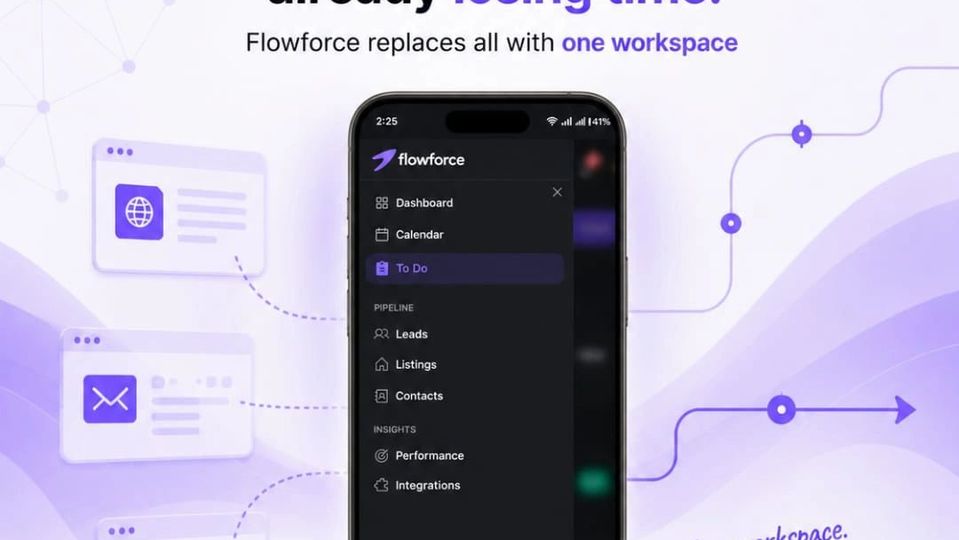
Flowforce is built to help B2B sales teams manage leads, deals, AI, and communication in one CRM workspace.
Instead of switching between separate tools for CRM updates, email, phone, SMS, meetings, and AI support, reps can work from one connected platform.
Flowforce supports sales productivity by helping teams:
- Manage leads and deals in one place.
- Access lead profiles and sales context faster.
- Use AI summaries to understand leads quickly.
- Create AI-generated email drafts.
- Call from the browser.
- Send emails and SMS from the CRM.
- Keep communication tied to leads and deals.
- Use cadences to organize follow-up.
- Give managers better visibility into team activity.
This matters because busywork grows when systems are disconnected. Flowforce helps reduce that friction by giving sales teams one place to manage the work that drives revenue.
Final Takeaway: Revenue Comes From Focus, Not Activity
Busy teams are not always productive teams.
If reps are spending too much time on manual updates, searching for context, rewriting emails, and switching tools, they may be working hard without creating enough revenue impact.
Better sales productivity does not come from asking reps to do more of everything. It comes from removing the work that gets in the way of selling.
With Flowforce, sales teams can manage leads, deals, communication, AI, and follow-up from one workspace, so reps can stay focused on the activities that actually move revenue forward.
FAQ
What is sales productivity?
Sales productivity is the ability of a sales team to turn time and activity into revenue outcomes. It focuses on how efficiently reps move leads, deals, and conversations forward.
Why do busy sales teams still miss revenue?
Busy sales teams miss revenue when too much time is spent on manual updates, searching for context, rewriting emails, and switching tools instead of selling and following up with prospects.
How can AI improve sales productivity?
AI can improve sales productivity by summarizing lead information, helping draft emails, suggesting next steps, and reducing repetitive work that slows reps down.
What tools improve sales productivity?
Tools that improve sales productivity include CRMs, AI email assistants, browser-based dialers, sales cadences, automation tools, and platforms that centralize communication and lead context.
How does Flowforce help sales teams reduce busywork?
Flowforce helps reduce busywork by bringing leads, deals, email, phone, SMS, AI, meetings, and follow-up into one CRM workspace for sales teams.