Salesforce is one of the most well-known CRM platforms in the world. It is powerful, highly customizable, and used by organizations of every size.
For many real estate brokerages, those strengths can also become challenges. A platform built for complex enterprise workflows may feel overwhelming for agents who need to manage leads, follow up consistently, and close more transactions.
If you are evaluating Salesforce or considering a switch, this guide explains where it excels, where it may not be the best fit for real estate, and what to look for when comparing Salesforce alternatives.
Also see our Salesforce for real estate comparison page for a side-by-side feature view.
Is Salesforce a Good CRM for Real Estate?
The answer depends on your business.
Salesforce can be an excellent option for large organizations with dedicated administrators and highly customized processes.
Many brokerages need a CRM that is easier to implement, faster to adopt, and designed around everyday real estate workflows — open houses, inquiry routing, and follow-up cadences.
The goal is not to choose the most powerful platform. It is to choose the platform your team will actually use.
Where Salesforce Excels
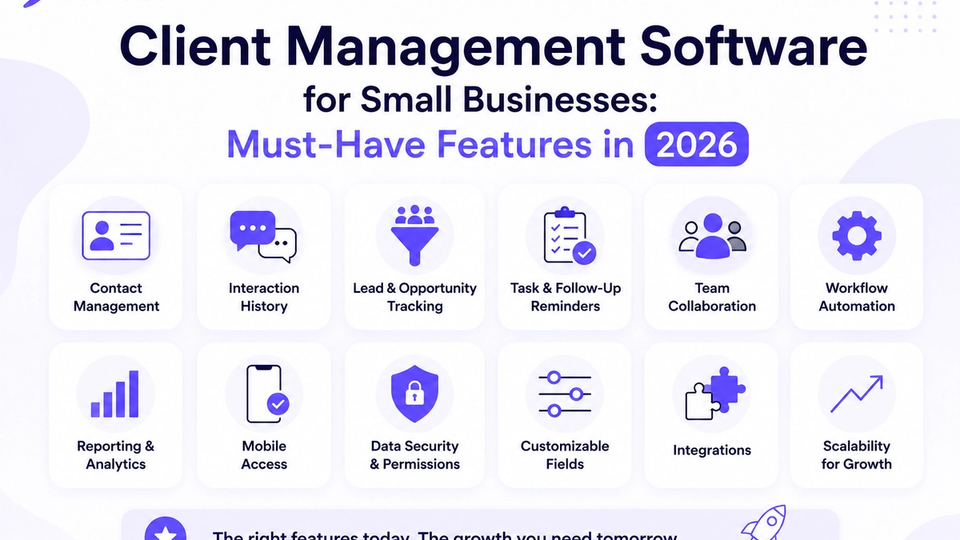
Salesforce offers capabilities many brokerages appreciate at scale:
- Extensive customization and object modeling
- Advanced reporting and analytics
- Large integration ecosystem
- Workflow automation
- Enterprise-grade security
- Scalable architecture
- App marketplace for extensions
These features make Salesforce a strong choice for organizations with complex operational requirements and internal CRM admins.
Potential Challenges for Real Estate Brokerages
Some brokerages find Salesforce challenging because of:
- Steeper learning curve for agents in the field
- Longer implementation timelines
- Greater administrative complexity
- Higher total cost as teams and seats grow
- Significant customization before workflows match real estate day-to-day
For smaller teams without a dedicated admin, these factors can slow adoption and reduce selling time.
Compare agent vs team needs in best real estate CRM for agents vs teams before you commit.
What Real Estate Brokerages Should Prioritize Instead
When evaluating CRM for real estate brokerages, focus on features that support daily workflow — not maximum configurability alone.
Look for:
- Contact and lead management
- Lead routing and assignment
- Open house workflows
- Inquiry management and speed-to-lead
- Follow-up reminders and cadences
- Pipeline visibility by agent and stage
- Mobile access
- Team collaboration
- Task automation
- Reporting managers can read without a analyst
Map those capabilities to stages in real estate CRM workflows.
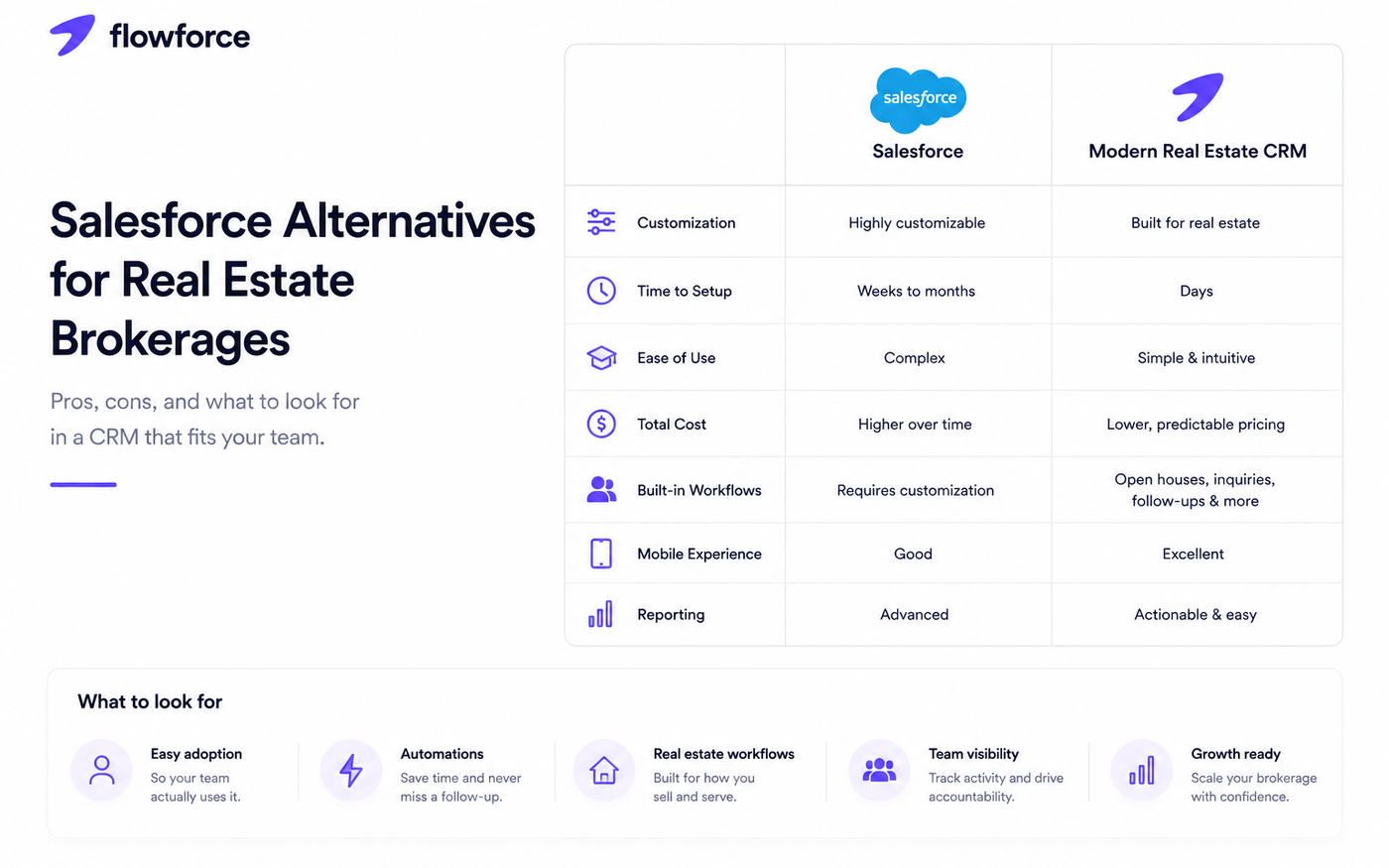
Salesforce vs Modern Real Estate CRMs
A practical comparison for brokerage decision-makers:
| Feature | Salesforce | Modern real estate CRM |
|---|---|---|
| Contact management | Yes | Yes |
| Pipeline tracking | Yes | Yes |
| Lead assignment | Yes | Yes |
| Mobile access | Yes | Yes |
| Real estate workflow templates | Usually requires customization | Often built in |
| Ease of adoption | Moderate to advanced | Beginner-friendly |
| Administrative overhead | Higher | Lower |
| Time to productivity | Longer | Faster |
Questions to Ask Before Switching
Before choosing a Salesforce alternative for real estate, ask:
- How quickly can new agents learn the system?
- Does it support open house workflows out of the box?
- Can leads be assigned automatically?
- Are follow-ups automated with clear owners?
- Can managers track agent activity without manual reports?
- Will the platform scale with our brokerage?
- Does it require significant customization to work?
These questions reveal whether a platform matches day-to-day needs — not just the RFP checklist.
Shortlist vendors with best CRM for real estate agents and best CRM for real estate teams after you answer them.
Use the small business CRM checklist and customer management software vs CRM guide to score finalists fairly.
Signs It's Time to Consider an Alternative
It may be worth evaluating other brokerage CRM software if:
- Agents struggle to use the system consistently
- Administrative work outweighs selling time
- Follow-ups are inconsistent across the team
- Reporting is difficult to interpret without exports
- Customization has become expensive or slow
- Adoption across the brokerage remains low after rollout
A CRM should simplify work — not create additional friction.
How Flowforce Supports Growing Brokerages
Flowforce is built for businesses that want modern CRM benefits without enterprise complexity — a practical Salesforce alternative for growing real estate teams.
Real estate teams use Flowforce to:
- Capture leads from multiple sources in one workspace
- Assign inquiries automatically
- Track opportunities visually on shared pipelines
- Automate follow-up tasks and cadences
- Monitor agent performance with activity timelines
- View complete customer interaction history
- Scale as the brokerage adds agents and ISAs
Instead of spending months configuring workflows, teams focus on relationships and closings.
Frequently Asked Questions
Is Salesforce good for real estate?
Salesforce is a powerful CRM that can work well for real estate businesses — particularly larger organizations with complex workflows and dedicated administrators.
Why do some brokerages look for Salesforce alternatives?
Some brokerages prefer solutions that are easier to implement, simpler for agents to use daily, and aligned with real estate follow-up workflows.
What should a real estate CRM include?
Contact management, lead routing, follow-up automation, pipeline tracking, mobile access, and manager reporting — at minimum.
Can a smaller brokerage benefit from a simpler CRM?
Yes. Many smaller brokerages prioritize ease of use and fast adoption over extensive customization they will never fully configure.
Choose a CRM That Fits the Way Your Brokerage Works
The best CRM is not always the one with the most features. It is the one your agents use every day.
See how Flowforce helps real estate brokerages manage leads, automate follow-ups, and stay accountable with a simple, modern CRM built for growing teams.